RPACT

Presentation for Pfizer

Gernot Wassmer and Friedrich Pahlke

RPACT GbR

March 1, 2023

RPACT / rpact

RPACT is a company which offers

  • enterprise R/Shiny software development services
  • consultancy and user training for clinical researchers using R
  • technical support for the R package rpact

\(\rightarrow\) www.rpact.com

rpact

  • Comprehensive validated R package
  • Design, simulation, and analysis of confirmatory adaptive group sequential designs
  • Monograph by Wassmer and Brannath, Springer, 2016

\(\rightarrow\) www.rpact.org

Company RPACT in Figures

Founded in May 2017 by Gernot Wassmer and Friedrich Pahlke

  • Idea: open source development with help of “crowd funding”
  • Currently supported by 21 companies1
  • \(>\) 50 presentations and training courses since 2018, e.g., FDA in March 2022

Current collaborators

  • 2 founders (Gernot Wassmer and Friedrich Pahlke)
  • 3 freelance R developers
    (1 Biostatistics PhD, 1 BSc graduate, 1 BSc student)
  • 1 Computer Science student

R package rpact in Figures

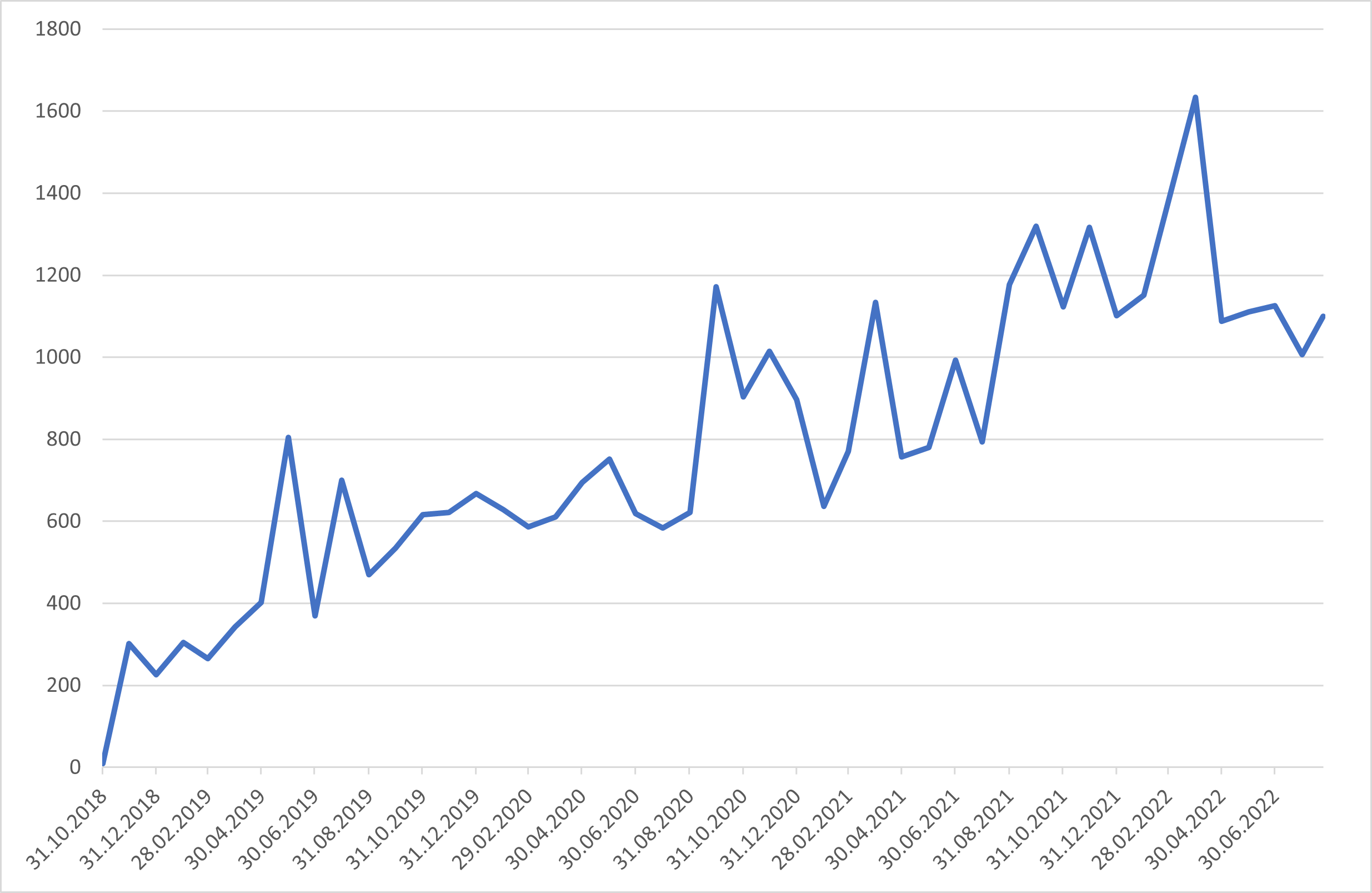
  • 21 releases on CRAN since October 2018
  • \(>\) 1,600 downloads (April 2022)

R package rpact – Functional Range

Design

  • Group sequential designs, e.g., Wang & Tsiatis \(\Delta\)-class, \(\alpha\)-spending, \(\beta\)-spending, …
  • Inverse normal design
  • Fisher’s combination test

Sample size and power calculation for

  • testing means (continuous endpoint)
  • testing rates (binary endpoint)
  • survival trials with, e.g.,
    • piecewise accrual time and intensity
    • flexible follow-up time specification
    • piecewise exponential survival time
  • fixed sample size design

R package rpact – Functional Range

Analysis tool for

  • continuous, binary, and survival data
  • multi-arm adaptive trials
  • population enrichment designs

Simulation tool for assessing adaptive strategies, e.g.,

  • continuous, binary, and survival endpoint
  • sample size reassessment
  • treatment arm or population selection rules
  • different methodologies

R package rpact – Getting started

Various learning concepts available:

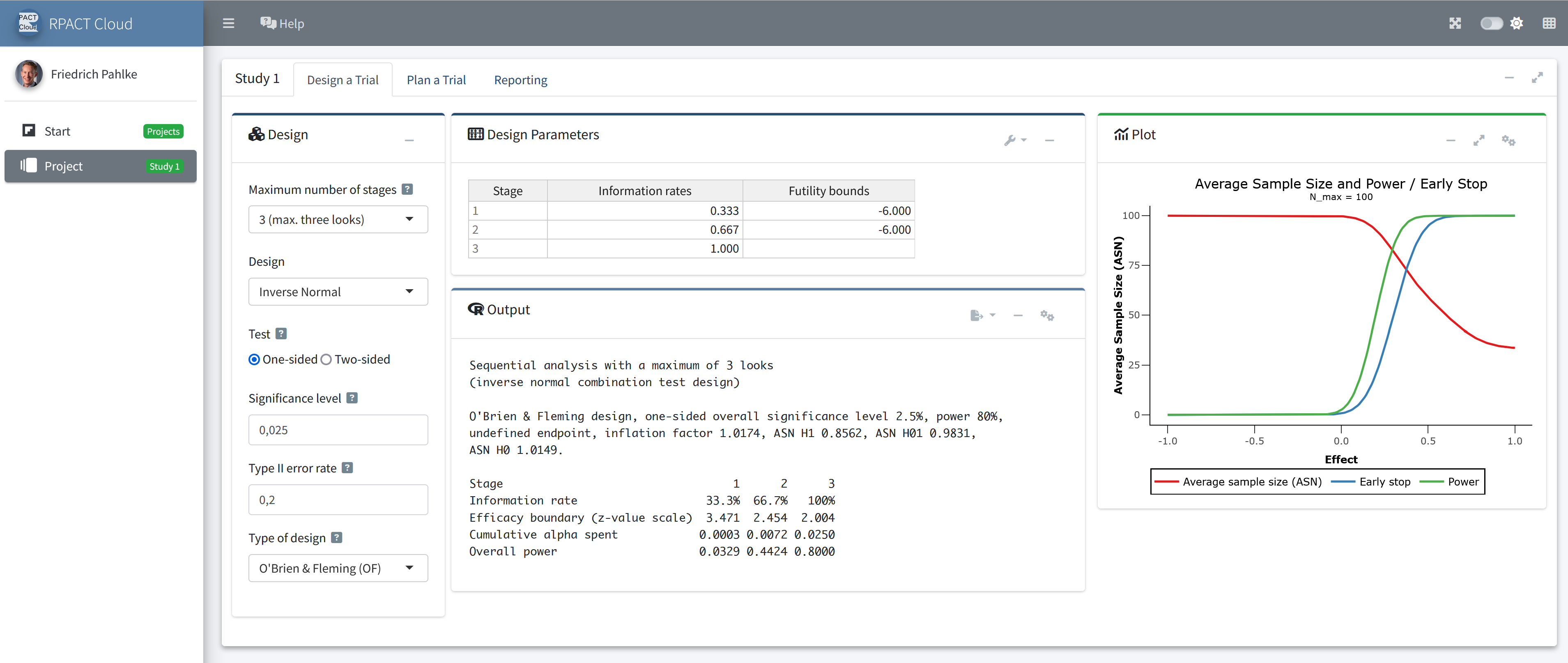
  1. Shiny app: shiny.rpact.com
  2. Vignettes: www.rpact.com/vignettes
  3. Training: online or onsite

Vignettes

  1. Defining group-sequential boundaries with rpact
  2. Designing group-sequential trials with two groups and a continuous endpoint with rpact
  3. Designing group-sequential trials with a binary endpoint with rpact
  4. Designing group-sequential trials with two groups and a survival endpoint with rpact
  5. Simulation-based design of group-sequential trials with a survival endpoint with rpact
  6. An example to illustrate boundary re-calculations during the trial
  7. Analysis of a group-sequential trial with a survival endpoint

Vignettes

  1. Defining accrual time and accrual intensity with rpact
  2. How to use R generics with rpact
  3. How to create admirable plots with rpact
  4. Comparing sample size and power calculation results for a group-sequential trial with a survival endpoint: rpact vs. gsDesign
  5. Supplementing and enhancing rpact’s graphical capabilities with ggplot2
  6. Using the inverse normal combination test for analysing a trial with continuous endpoint and potential sample size reassessment

Vignettes

  1. Planning a trial with binary endpoints with rpact
  2. Planning a survival trial with rpact
  3. Simulation of a trial with a binary endpoint and unblinded sample size re-calculation in rpact
  4. How to create summaries with rpact
  5. How to create analysis result [one- and multi-arm] plots with rpact
  6. How to create simulation result [one- and multi-arm] plots with rpact
  7. Simulating multi-arm designs with a continuous endpoint
  8. Analysis of a multi-arm design with a binary endpoint

Vignettes

  1. Step-by-Step rpact Tutorial
  2. Planning and Analyzing a Group-Sequential Multi-Arm-Multi-Stage Design with Binary Endpoint using rpact
  3. Two-arm analysis for continuous data with covariates from raw data1
  4. How to install the latest developer version1
  5. Delayed Response Designs with rpact

Package Concept – Validation

Why is rpact a reliable R package?

  • testPackage(): installation qualification on a client computer or company server
  • rpact 3.3.4: 28,787 unit tests
  • As few dependencies as possible:
    • Imports: Rcpp1
    • Suggests: testthat, ggplot2, mnormt2

Package Concept – Validation

Concept is compliant to the guidelines of the R Validation Hub

Package Concept – Validation

Formal validation

  • Validation approach inspired by GAMP² 5
  • The unit tests reference to the functional specification
  • The test protocol references to the test plan
  • Automatic generation of test plan and test protocol
    \(\rightarrow\) rpact.validator

Validation documentation

  • rpact 3.3.4: 9,959 pages
  • Customer specific version for each rpact release
  • Licensed for exclusive use by our customers

Why become a RPACT SLA customer?

  • Be part of the “RPACT User Group” \(\rightarrow\) yearly customer meetings
  • Get technical software support for written support requests1
  • Get one Pfizer specific training per year
  • Get a Pfizer specific software validation documentation for each rpact release on CRAN
  • Get access to the members area at www.rpact.com
  • Make an rpact installation qualification on each Pfizer computer with your personal testPackage() token and secret
  • Determine the direction of rpact future development activities
  • Help to shape Open Source in Pharma2